Quantum Computing's Next Leap: Error Correction Moves from Labs to Reality
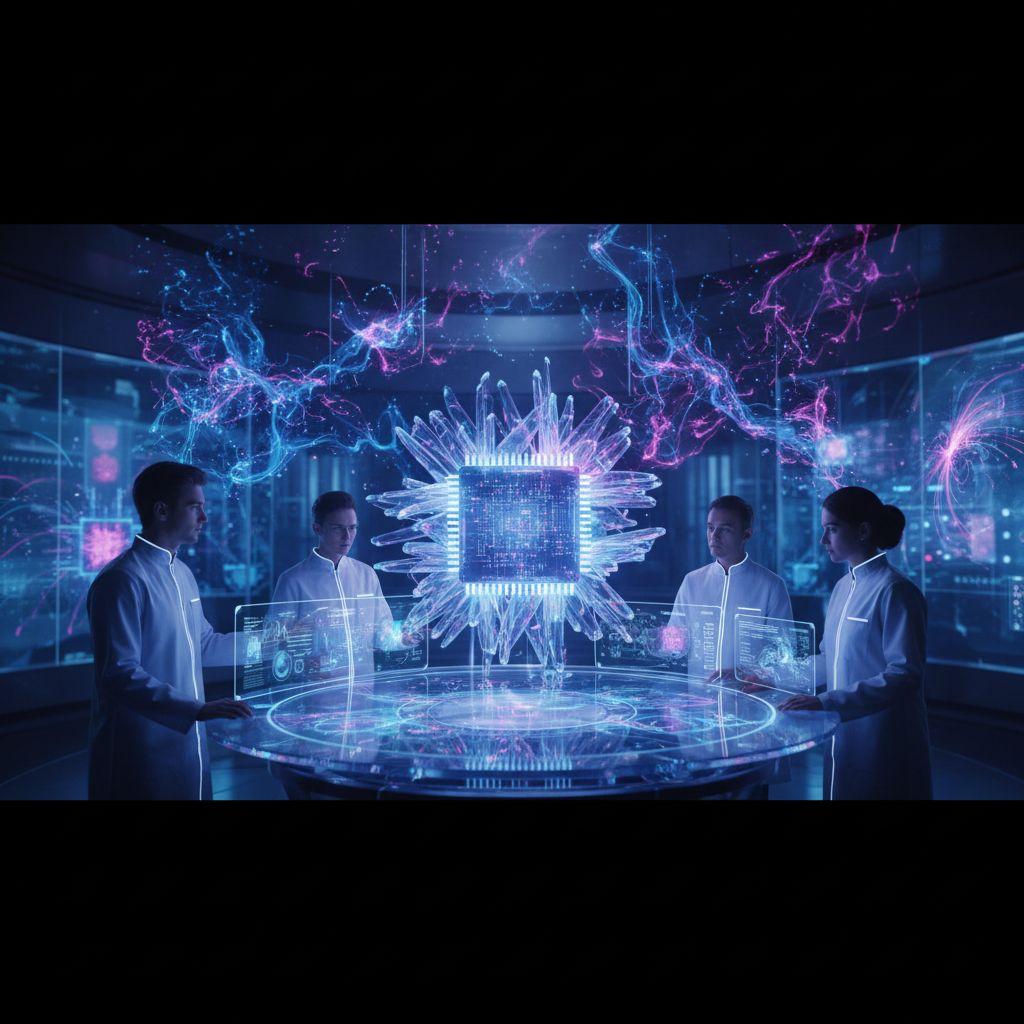
Quantum error correction is transitioning from theoretical research to practical application, signaling a crucial step towards robust, fault-tolerant quantum computers. This development addresses the inherent instability of qubits, promising to unlock unprecedented computational power.
The Quantum Conundrum: Fragility and Promise
Quantum computing stands at the precipice of a technological revolution, promising to solve problems intractable for even the most powerful classical supercomputers. Industries from pharmaceuticals to finance eagerly anticipate its arrival, envisioning breakthroughs in drug discovery, materials science, and cryptography. Yet, the path has been arduous, largely due to the inherent fragility of quantum states. Qubits, the fundamental building blocks of quantum computers, are extraordinarily sensitive to environmental noise, leading to rapid decoherence and computational errors. This instability has been the primary barrier to realizing the full potential of quantum supremacy.
The Imperative of Error Correction
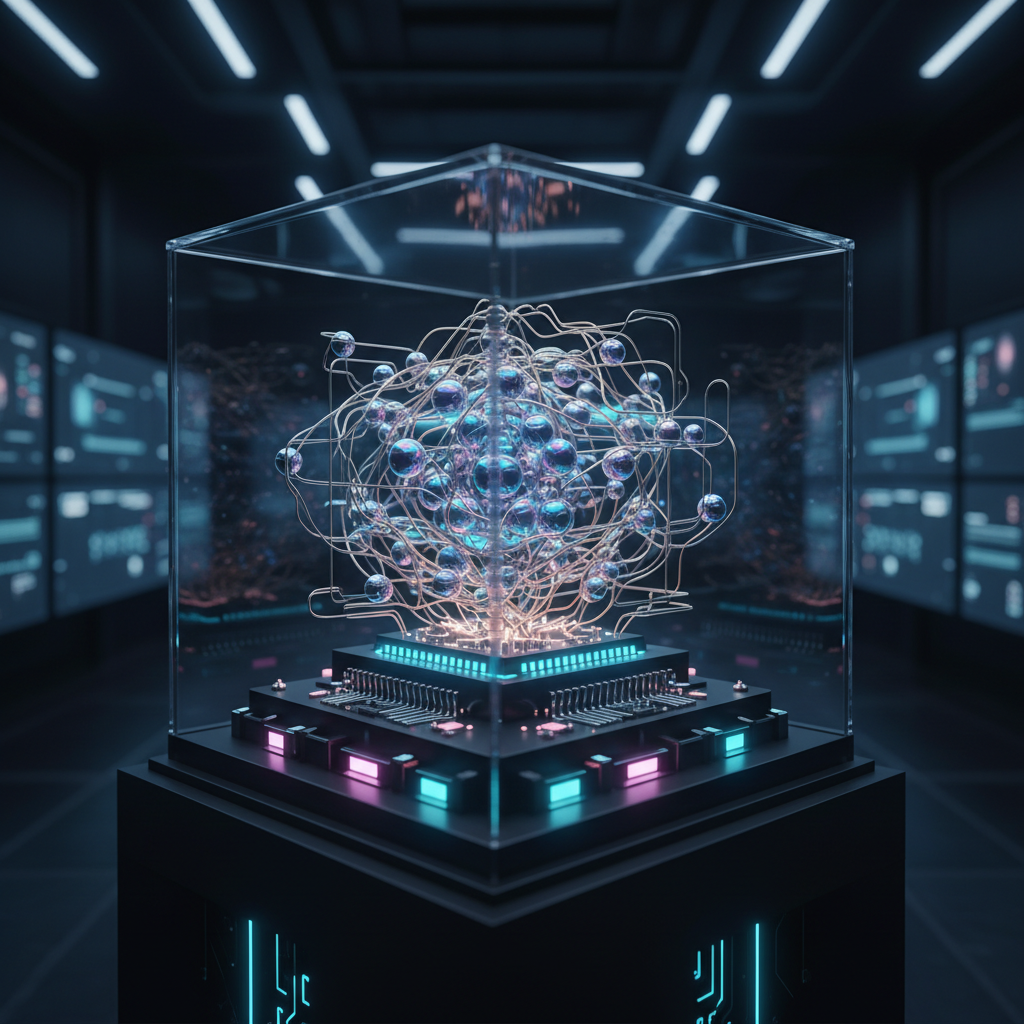
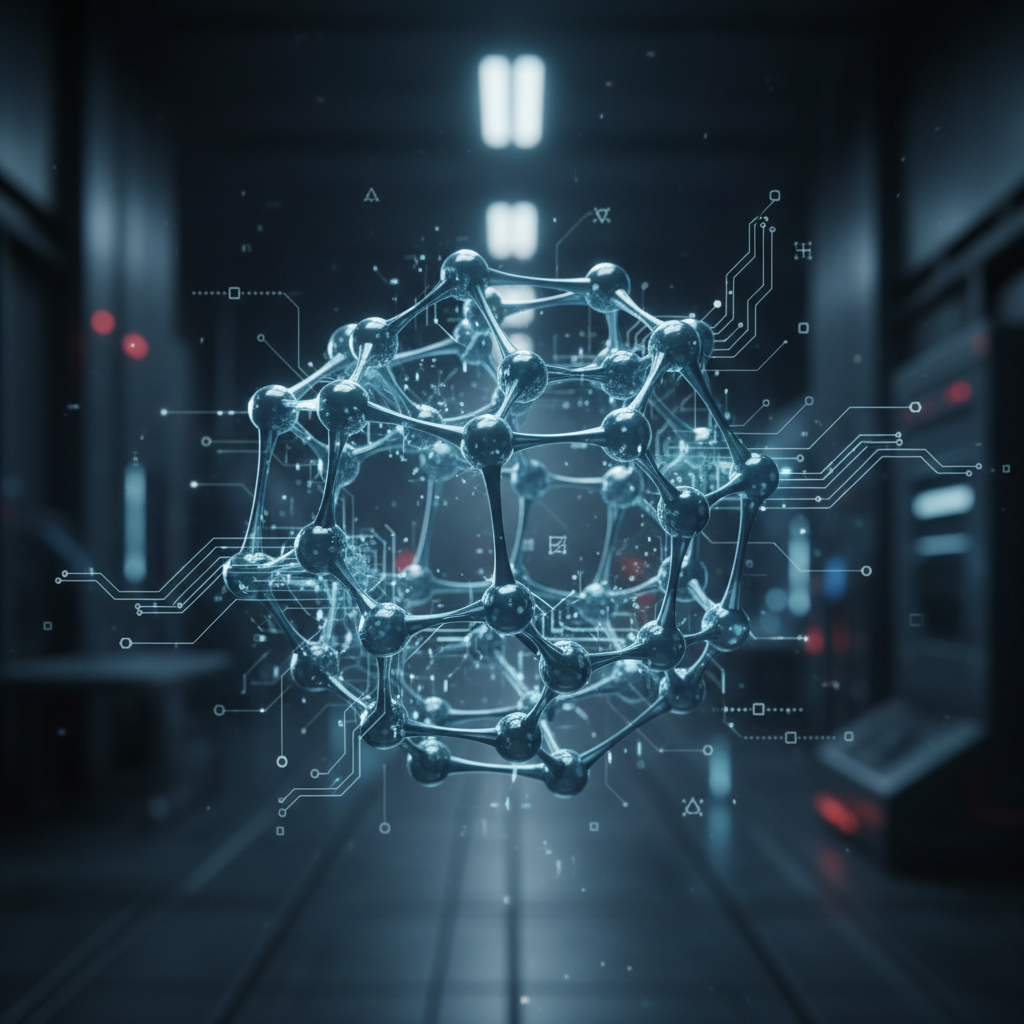
Just as classical computers rely on robust error correction codes to ensure data integrity, quantum computers require a similarly sophisticated mechanism. However, quantum error correction (QEC) is significantly more complex. The no-cloning theorem, a fundamental principle of quantum mechanics, prevents simply duplicating a qubit to check for errors. Instead, QEC schemes encode quantum information redundatively across multiple physical qubits. These 'logical' qubits are then stabilized by measuring ancillary qubits which detect errors without disturbing the encoded information itself. This process demands a significantly larger number of physical qubits than logical qubits – a ratio that has historically been prohibitively high.
From Theory to Practical Demonstration
For years, QEC was primarily a theoretical pursuit, demonstrated in small, proof-of-concept experiments with only a handful of qubits. The challenge was scaling these demonstrations to a point where a logical qubit could outperform its constituent physical qubits in terms of error rates. Recent breakthroughs are changing this narrative. Leading quantum hardware developers are now showcasing the creation and sustained operation of logical qubits with demonstrably lower error rates than their underlying physical qubits. This is a monumental shift, indicating that the threshold for practically useful quantum error correction is within reach. These advancements often involve sophisticated techniques like topological codes or surface codes, which leverage properties of entanglement across a grid of qubits to distribute and detect errors.
Hardware Innovations Driving Progress
The progress in QEC is inextricably linked to advancements in quantum hardware. Superconducting circuits, trapped ions, and neutral atoms are just a few of the platforms being refined to create more stable and controllable qubits. Engineers are pushing the boundaries of fabrication precision, coherence times, and qubit connectivity. For instance, the ability to rapidly and reliably entangle distant qubits, perform high-fidelity single-qubit gates, and read out qubit states with minimal error are all critical prerequisites for effective QEC. Furthermore, controlling the thermal environment to near absolute zero in superconducting architectures, or precisely manipulating individual ions with lasers, highlights the extreme engineering challenges being overcome.
The Road Ahead: Fault-Tolerant Quantum Computing
While current demonstrations are promising, the journey to truly fault-tolerant quantum computers is still ongoing. The overhead required for QEC means that thousands, if not millions, of physical qubits will be needed to create just a handful of stable logical qubits capable of running complex algorithms. This requires further miniaturization, improved coherence, and more efficient error detection and correction protocols. Research is focusing on novel quantum architectures that natively reduce error rates, and on developing more efficient QEC codes that demand less physical qubit overhead. The next few years will see intense competition and collaboration in academia and industry to refine these techniques and build the first generation of genuinely fault-tolerant machines.
Conclusion
The transition of quantum error correction from a laboratory curiosity to a demonstrable reality marks a pivotal moment in quantum computing. It signals that the foundational engineering challenges are being systematically addressed, paving the way for the eventual realization of powerful, stable quantum computers. While significant hurdles remain, particularly in scaling these systems, the current trajectory suggests that the era of practical quantum advantage is drawing nearer, promising to redefine computational possibilities across countless domains.
Related Articles
More from Emerging Tech